The profession is operating in a context of change. Market developments increasingly require us to position our work within a broader geopolitical framework, both within the EU and globally. We are witnessing the growth of parallel capital markets, a rise in off-balance-sheet financing structures, expanding crypto-capital flows, and a deregulation agenda. These developments raise fundamental questions for the audit and assurance market – not only in terms of emerging risks, but also regarding where new opportunities may arise.
At the same time, artificial intelligence is set to transform the profession. AI will influence expectations around audit quality, regulatory and legal frameworks, business models, and even the concept of a license to operate. Large technology companies, with significant computing power, financial resources and political influence, may become disruptive actors – challenging traditional, human-centred assurance models in ways that extend well beyond current debates.
Therefore, we undertook during 2025 project Purpose 2030, a strategic stakeholder assessment – the first of its kind since 2014 – engaging our 49 member bodies, volunteers, staff, and key external stakeholders. This comprehensive exercise helped to assess what matters most to our members, to shape strategic priorities, and sharpen our mandate going forward.
In this context, deep technical expertise in accounting, audit, legal and tax remains essential. However, technical excellence alone will no longer be sufficient as a differentiator. The continued relevance of Accountancy Europe will depend on how effectively we combine strong technical foundations with strategic insight, technological acumen, and understanding the market environment. It is about the ability to adapt and change and retain what is good. These themes will be central to the implementation of Purpose 2030 in the year ahead.
Internally, we remain focused on ensuring that our organisation is fit for the future. Strengthening our governance, operational effectiveness, and financial optimisation are essential to delivering our strategic objectives. Over the past year, Accountancy Europe has organised various events, contributed to lectures and panel sessions, discussed topics relevant to the profession in sector groups, and published influential reports. In addition, consultations were held at both European and international political levels, as well as with other stakeholders, regarding the future of the profession. A great deal of gratitude is due to everyone who contributed, including our staff, volunteers and colleagues at the many organisations we closely engage with.
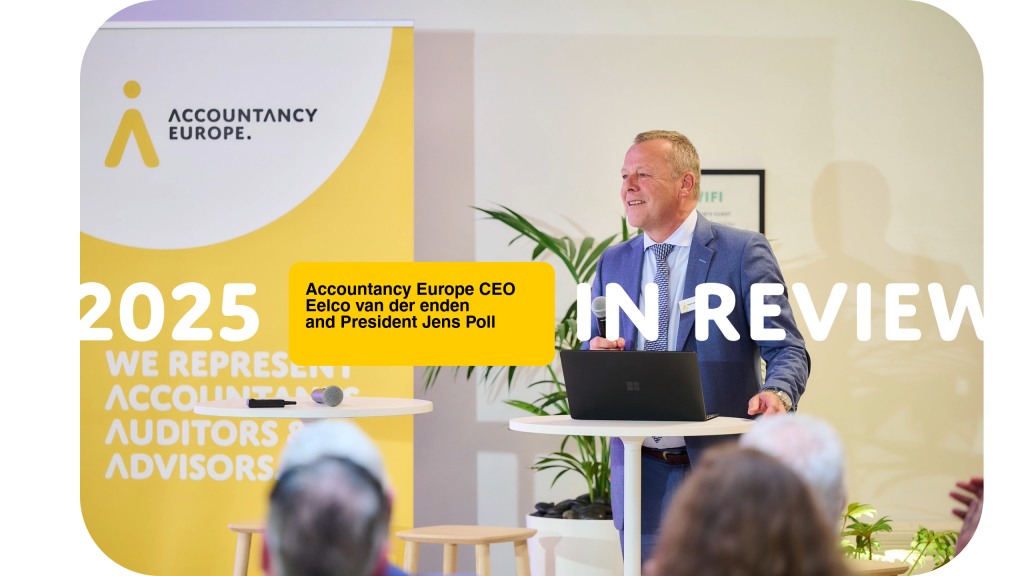
Eelco van der Enden, CEO
As I reflect on the first year of my Presidency, I am reminded of the vital role the accountancy profession plays in Europe’s economic and societal landscape. The past year has seen renewed discussion at European level on how sustainability-related regulation can be simplified while remaining effective. As these changes move towards implementation across Member States, certainty will be key. Companies and investors rely on stable and predictable rules, and well-functioning capital markets depend on high-quality, reliable information. Our profession stands ready to support this transition.
Transformation continues to shape our profession. Sustainability, digitalisation and evolving stakeholder expectations are changing how organisations operate and how value is created over the long term. Strong corporate governance is central to this shift. The profession plays a vital role in supporting boards and management through governance frameworks, enhancing transparency and promoting long-term value creation grounded in the public interest.
These same principles guide Accountancy Europe’s own work. Good governance underpins our credibility as a representative organisation and our ability to contribute constructively to European policy discussions. This year also marked the first year of our new CEO, Eelco. New leadership brings fresh perspectives and renewed energy, challenging us to reflect, adapt and evolve. I look forward to the second and last year of my mandate as we continue to strengthen the profession’s contribution to a stable, competitive and sustainable European economy.
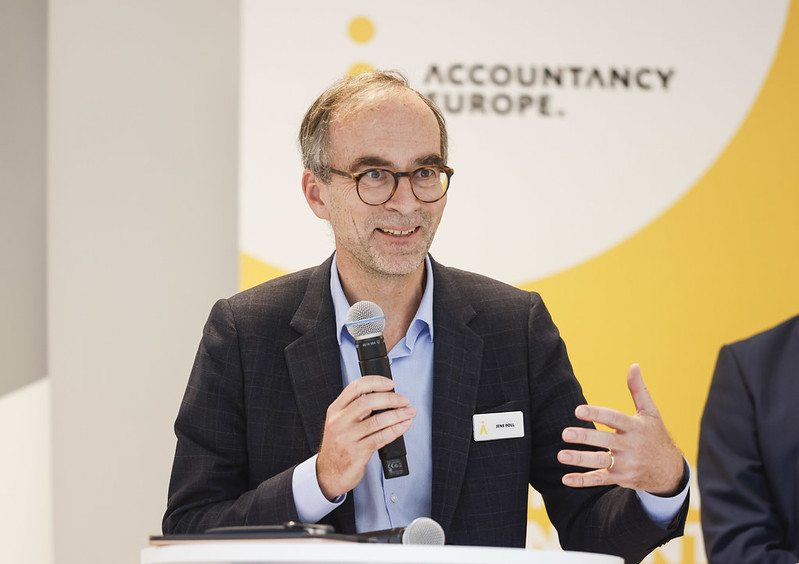
Jens Poll, President
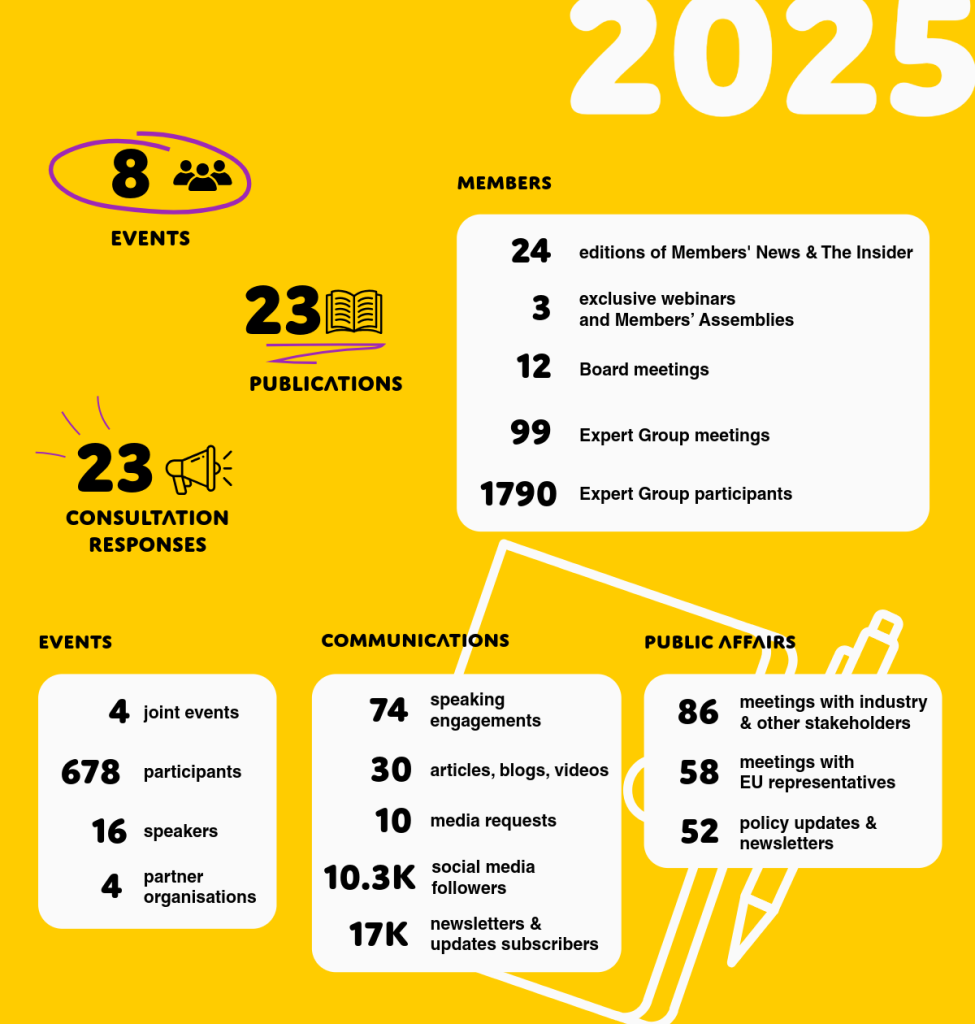
Accountancy Europe, together with its members, has developed a two-year strategy running until the end of 2026 to ensure that the accountancy profession’s expertise supports the delivery of the EU’s priorities, an objective that is particularly relevant in today’s turbulent environment. Accountancy professionals play a critical role as guardians of trust and transparency, which are the foundations of well-functioning markets, and we aim to bring their practical expertise to EU policymaking.
Our 2025–2026 strategy is built on three pillars: strengthening Europe’s competitiveness and financing, supporting the twin digital and sustainable transitions, and reinforcing the resilience of the corporate ecosystem.
Competitive European economies and companies are essential to safeguarding jobs, social wellbeing and citizens’ needs. Efforts to streamline and simplify EU legislation plays a key role here as well. At a time of heightened geopolitical tension and uncertainty, Europe must be able to rely on its own economic foundations. As highlighted in Mario Draghi’s report, this also requires sufficient public and private investment.
The digital and sustainability transitions are key to securing Europe’s future. Digital technologies can reduce administrative burdens, improve data quality and boost productivity. At the same time, sustainability is essential to ensuring that economic activity respects planetary boundaries and remains viable in the long term.
Finally, a resilient corporate ecosystem depends on all actors, including company boards and directors, auditors and accountants, supervisors and regulators, working together. Strengthening this ecosystem helps mitigate systemic risks and reduces the impact of human error when challenges arise.
In 2025, Accountancy Europe strengthened its presence on the administrative burden reduction and omnibus agendas, as well as on public financing and the Savings and Investment Union (SIU).
Our work on the Sustainability Omnibus was both impactful and visible, supported by proactive engagement with the European Commission and the European Parliament officials (see the Sustainability section below). We also published recommendations on simplifying the EU tax legislation, covering both direct and indirect taxation, and contributed to the European Parliament’s work under the leadership of MEP Michalis Hadjipantela (EPP/Cyprus).
Our response to the European Commission’s Call for Evidence on the digital omnibus set out the accountancy profession’s recommendations for streamlining EU digital legislation. Our approach goes beyond reducing requirements, emphasising the need to preserve what is necessary to meet legislative objectives and safeguard the EU’s digital sovereignty. In parallel, our response to the Commission’s 28th regime consultation presented a holistic vision for a new EU company law framework that delivers meaningful simplification for companies operating across borders in the Single Market, particularly SMEs. A key element is the development of a reliable “28th regime company brand” that investors and regulators can trust.
On financing, we called on policy-makers to focus not only on additional public funding but also on making smarter use of existing resources. We responded to the Commission‘s consultation on the EU’s long-term budget, advocating appropriate funding for financial and sustainability reporting and assurance, while supporting objectives such as facilitating cross-border trade, protecting the EU’s customs border, and tackling cross-border tax and VAT evasion. Finally on SIU, we issued high-level principles to support capital market integration, shared views on capital market supervision, and provided technical advice to the Commission on the use of tax incentives to support investment and savings.
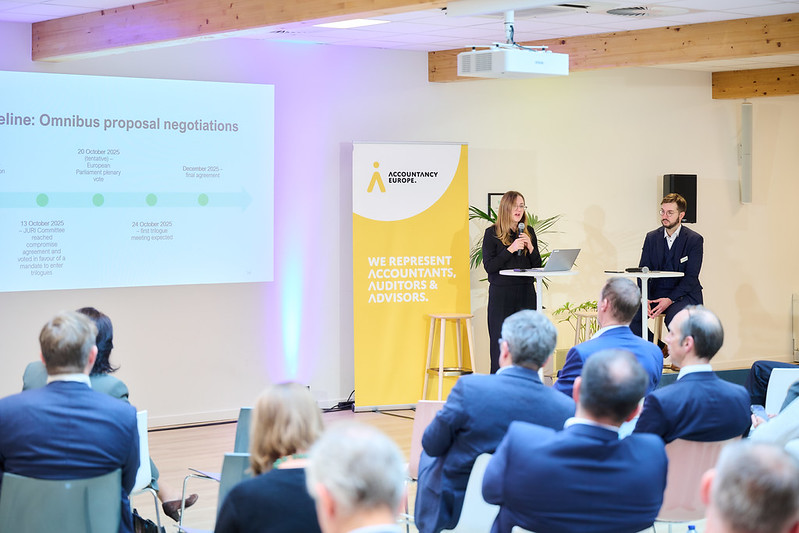
Accountancy Europe focused on the Sustainability Omnibus proposal, which significantly changes sustainability reporting and assurance requirements. We provided factual analyses to inform members and stakeholders about the proposed changes, including through our Omnibus Hub, which brings together technical assessments, input to the political debate, and the professions’ views.
To inform and support policy discussions, we issued a data-based analysis, assessing the impact of different proposals to revise the CSRD scope thresholds. In parallel, we continued advocating for a unified approach to sustainability assurance to facilitate greater consistency and alignment of assurance practices across EU Member States.
We regularly engaged with the European Parliament and the European Commission. Wim Bartels, Chair of Accountancy Europe’s Sustainability Policy Group and member of EFRAG’s Sustainability Reporting Board, spoke on behalf of Accountancy Europe at the European Parliament Legal Affairs (JURI) Committee hearing on sustainability reporting obligations. We also provided the profession’s input to MEPs surveys on the Omnibus proposal, helping inform and shape their parliamentary positions. To strengthen our impact, we built alliances with other stakeholders through joint statements, coordinated calls and similar collective actions.
Together with the European Contact Group (ECG), we held the third CSRD Practice Forum meeting on the CSRD implementation. This continuous engagement with preparers, assurance providers, users, standard setters, regulators and enforces on the CSRD implementation was an opportunity to reflect on the first year CSRD reporting and assurance challenges as well as the Omnibus proposal implications.
We commenced work with the newly established Accountancy Europe Task Force on EU Taxonomy to contribute the profession’s perspective to the discussions on the EU Taxonomy implementation. We also applied to join the EU Platform on Sustainable Finance, where our appointed candidate will represent Accountancy Europe in the Platform’s third mandate, advising on the EU Taxonomy, its revision, and related sustainable finance initiatives.
In 2025, Accountancy Europe continued to be represented at the EFRAG Sustainability Reporting Board, a committee responsible for developing the ESRS and delivering them to the European Commission.
We engaged in the ESRS simplification process, starting with a factsheet on the key Omnibus proposals, and a statement on the due process considerations considering the very short timeframe to revise the 12 ESRS.
We provided input to EFRAG’s 1-month survey that aimed to inform the revision of the ESRS and followed up with a statement summarising our main contribution. We also published “Sustainability statements based on ESRS: “compliance” or “fair presentation”?”, informing about the similarities and differences of the two frameworks. Accountancy Europe responded to EFRAG’s 2-month consultation on the Exposure Drafts with the Amended ESRS and followed up with a statement highlighting our key feedback.
We continued advocating for an approach to sustainability assurance to facilitate greater consistency and alignment of assurance practices across EU Member States. In this context, we engaged with the Committee of European Auditing Oversight Bodies (CEAOB) and other stakeholders to discuss on the CSRD assurance challenges and ways to address them.
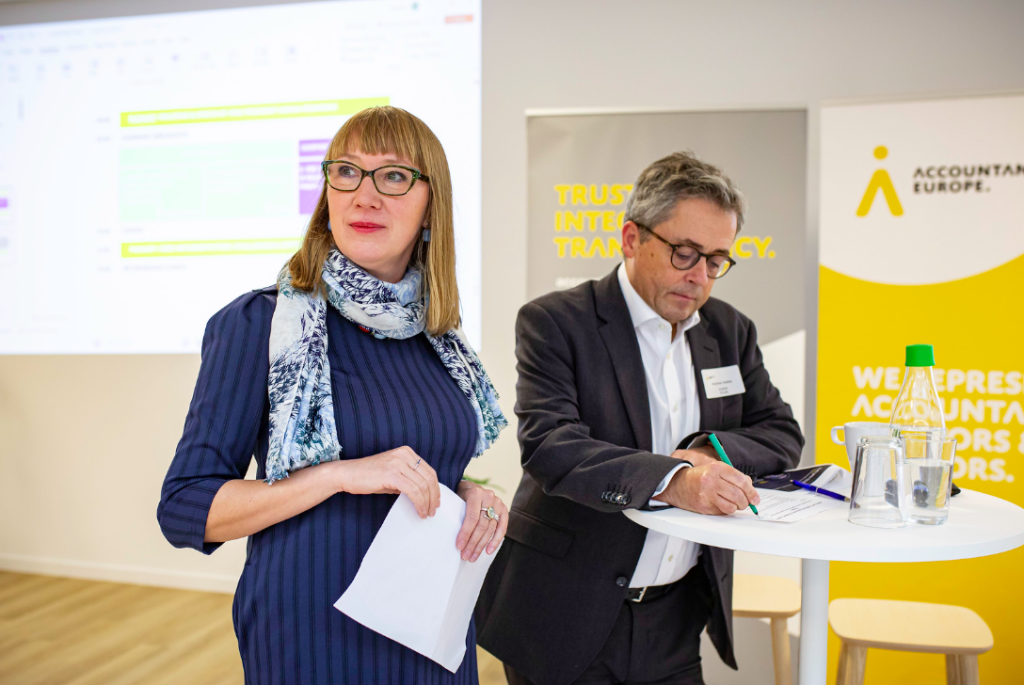
Accountancy Europe co-partnered with key European stakeholders in the EY European Corporate Governance Conference 2025, held under the auspices of the Polish Presidency of the Council of the EU. The high-level forum brought together board leaders, investors, policymakers, academics, and civil society to shape debate on how effective governance supports European competitiveness, resilience, and sustainability, particularly in the context of security challenges, cybersecurity, AI, and high-quality corporate reporting.
Our CEO’s moderation of a flagship fireside chat helped raise Accountancy Europe’s profile by bridging perspectives between boards, investors, and executives, while reinforcing the role of corporate governance as a practical lever for companies and SMEs operating in an increasingly complex environment.
Throughout the Omnibus I policy process, we also delivered tangible value to our members by translating complex regulatory developments into timely, accessible, and actionable insights. Targeted factsheets and explanatory materials on changes to the Corporate Sustainability Due Diligence Directive (CSDDD) enhanced members’ understanding of ongoing developments and their practical implications. In parallel, our op-ed amplified the profession’s voice in the public debate, underlining that sustainable business practices are integral to long-term European competitiveness.
On audit, Accountancy Europe focused on the EU audit supervision. We published our paper on principles and good practice to support more effective and coherent audit supervision in the EU, particularly for Public Interest Entities (PIEs) and cross-border audits where multiple national authorities are involved. For non-PIE audits, supervision should remain primarily national as the system overall works well. In our statement we also highlighted the importance of a well-designed and proportionate approach to any potential EU-level supervisory reform, building on existing national practices. This topic remains high on our agenda, with potential further EU developments ahead.
On the international standards, we engaged with IAASB and responded to the consultations on IAASB’s post-exposure consultation on its listed and PIEs project and IAASB exposure draft narrow-scope amendments.
We also contributed to the International Foundation for Ethics and Audit (IFEA) Stakeholder Advisory Council (SAC). We provided insights into emerging developments that could impact the IAASB and IESBA and advised on their strategies, work plan priorities and significant decisions on their projects.
Through these efforts, we continue to advocate for a resilient, forward-looking, and high-quality audit environment that adapts to emerging risks, technological developments, and evolving stakeholder expectations.
Accountancy Europe continues to push for SME friendly legislation that puts into practice the ‘think-small’ approach and consider the impact on SMEs and their SMP advisors of EU legislation. During 2025 this can be seen in our responses and consultations covering such diverse areas as the CSRD and CSDDD omnibuses, VAT in the Digital Age, the proposed 28th Regime, tax legislation and the new Anti-Money Laundering rules. and co-hosted a workshop with Sage Software discussing how EU digital initiatives impact small business – especially e-invoicing. We also attended the EC’s annual SME Assembly in Copenhagen.
Throughout the year we have been active members of EFRAG’s VSME Forum, helping to develop additional detailed guidance and digital reporting tools to help SMEs and their SMP advisors successfully implement sustainability reporting using the VSME. In the public domain, we also responded to EFRAG’s VSME market acceptance survey.
We also continue to represent professional accountants in our collaboration with the EU’s Intellectual Property Office’s (EUIPO) support for small businesses, Ideas Powered for Business, and to promote the role that accountants can play in helping SMEs leverage their intellectual property to improve their competitiveness. We are represented on both the IP-backed finance technical group and IP and competitiveness group.
In respect of SME and SMP specific publications, we published The EU AI Act: a guide for SME accountants. This is designed to demystify the complex new rules about the deployment of AI so that accountants can help ensure that their SME clients fully realise their potential in this area, whilst remaining in compliance with the rules.
Accountancy Europe’s work on technology continued to focus on practical support for companies, especially SMEs, as well as supporting the profession’s digital journey.
For instance, we published a factsheet on the EU AI Act, tailored specifically for a SME and SMP audience, to inform them about key legislative changes and potential impact. We also co-hosted a workshop with Sage Software and a workshop with Sage Group discussing how EU digital initiatives impact small business, especially e-invoicing
We published a statement on the review of the Digital Operational Resilience Act (DORA), highlighting the need to balance digital operational resilience with simplification. The statement set out key considerations for auditors, including proportionality and coherence with existing audit quality and risk management frameworks. We also responded to the Commission’s Call for Evidence on the digital omnibus, where we also commented on DORA but set out broader principles for EU legislators to follow when simplifying EU digital legislation.
Together with the IAASB, we hosted a roundtable of senior leaders across Europe’s external reporting ecosystem to explore how emerging technologies can transform audit and assurance, enhance engagement quality, and support the application of IAASB’s quality management standards.
Accountancy Europe was an observer to the World Intangible Capital Initiative (WICI)’s forum on Strategic Intangibles Initiative.
We also contributed with several comment letters on important financial reporting consultations issued by EFRAG or the IASB such as Provisions -Targeted Improvements – Proposed amendments to IAS 37, Equity Method of Accounting – IAS 28 Investments in Associates and Joint Ventures (revised 202x) and EFRAG Financial Reporting Due Process Procedures.
In parallel, we continued to collaborate closely with EFRAG and provided our views on significant financial reporting topics, through our membership in EFRAG Financial Reporting Board.

The EU’s tax landscape will also be impacted by the drive to improve competitiveness, to simplify and to reduce burden for businesses. In 2026 we expect a tax omnibus and in anticipation of this we published Recommendations to streamline the EU tax system, setting out our views on what should be done to make European tax systems less complex and more effective. The European Parliament (EP) subsequently published its own tax simplification recommendations, many of which echoed our recommendations, and Accountancy Europe was invited to attend a workshop by the EP to discuss tax legislation and administrative burdens.
During 2025 several tax initiatives were either agreed or came into force and we produced summaries of the main provisions likely to be of importance to the profession and their clients covering significant changes to the Carbon Border Adjustment Mechanism (CBAM), agreement of VAT in the Digital Age proposals and the entry into force of revisions to the IESBA Code regarding tax planning.
We also responded to public consultations in respect of VAT rules applicable to travel and tourism sector as well as the tax element in other public consultations, including the circular economy and the EU’s taxonomy.
In 2025, Accountancy Europe engaged closely in EU anti-money laundering (AML) policy work, ensuring the accountancy profession’s perspective was reflected as new rules and institutions took shape. We positioned the profession as a constructive stakeholder providing strong, practice-based expertise and insight to AMLA and the European Commission (EC), while highlighting the practical realities firms face when applying AML requirements across different business contexts.
We contributed actively to discussions on the future AML ecosystem, engaging with EU institutions, regulators, and other professions to promote a risk-based, proportionate, and workable approach. A highlight was the Effective by design: shaping the future of AML standards roundtable, hosted jointly by Accountancy Europe and FSR – Danish Auditors in the context of the Danish Presidency of the Council of the EU, where AMLA Executive Board member Rikke‑Louise Ørum Petersen, representatives from the EC, and non‑financial obliged entities explored how Regulatory Technical Standards can be more coherent, proportionate, and practicable for professions beyond the financial sector. Our response to the EBA consultation and our publication of 7 principles for AML Regulatory Technical Standards development helped steer technical rulemaking towards greater clarity, consistency, and usability, particularly for small and medium-sized practices.
To support members’ readiness, we published practitioner-focused guidance on the new EU AML rules, translating complex legislation into accessible insights and outlining key preparatory steps ahead of implementation. In parallel, our events broadened the debate beyond compliance. At our Beyond compliance – the human cost of money laundering event, Commissioner Maria Luís Albuquerque underlined the essential role of the accountancy profession in tackling money laundering and protecting society, reinforcing the public-interest value of accountants’ work.
Overall, this work amplified member voices in EU policy debates and helped firms navigate significant AML change with greater confidence.
The Public Sector Group’s work in 2025 was primarily based around the vitally important issue of public sector sustainability. We organised a very popular webinar, Is the public sector sustainable? What’s next for sustainability reporting in accounting, that examined developments in public sector sustainability reporting and which also covered what the public sector could learn from the private sector experience. We also responded to the sustainability related public consultations from the IPSASB – ED 92, Tangible Natural Resources and SRS ED 1, Climate-Related Disclosures to help the IPSASB drive forward sustainability related disclosures in the public sector. We also responded to the IPSASB public consultation ED 93, Definition of Material.
Accountancy Europe is closely working with the IPSASB and provided recommendations on future projects through our membership in their Consultative Advisory Group.
We also issued a statement on the EU’s long-term budget, calling on policy-makers to focus not only on additional public funding but also on making smarter use of existing resources. Linked to that, we responded to the Commission‘s consultation on the EU’s long-term budget, advocating appropriate funding for financial and sustainability reporting and assurance, while supporting objectives such as facilitating cross-border trade, protecting the EU’s customs border, and tackling cross-border tax and VAT evasion.
Ethical behaviour continues to form the foundation of the accountancy profession, ensuring trust, integrity, and transparency. In 2025, Accountancy Europe responded to the IESBA consultation on auditor independence for collective investment vehicles (CIVs) and pension funds.
We contribute to the development of ethical standards through engagement with standard setters and relevant stakeholders, providing input aimed at supporting high-quality and workable guidance for the profession. Our work helps promote ethical frameworks that underpin confidence in financial and sustainability reporting.
Accountancy Europe Banks Working Party exchanged views with several European regulators and supervisors. These meetings were helpful to inform about the profession’s position and provide recommendations where appropriate.
We have also issued our publication Supervisory expectations versus financial reporting requirements to provide the profession’s view on where supervisory and financial reporting can converge, and point to areas where there are limitations for this convergence. This guidance will serve as a basis in discussion between auditors, banks and supervisors.
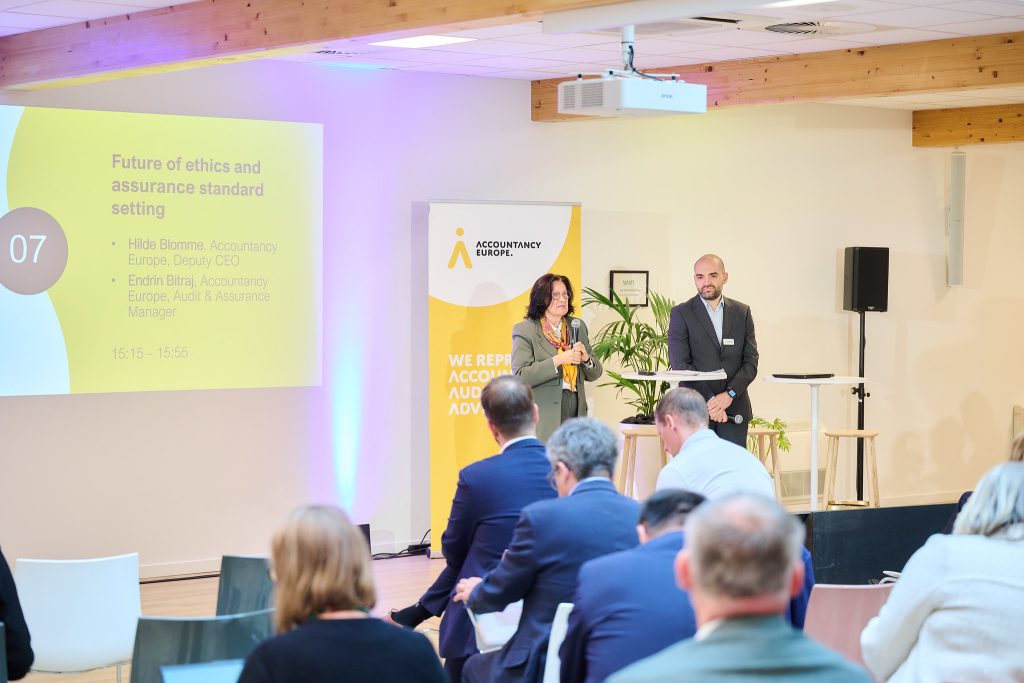
In 2025, Accountancy Europe especially focused on monitoring and analysing developments around external capital participations in accountancy and audit firms, with a particular focus on private equity (PE) and broader third-party ownership trends.
We published our first paper “Private equity investments in accountancy firms” which includes factual information on PE investment in accountancy and audit sector in the last 10 years in Europe. The paper also included country level activity, sector trends and emerging investment models. Our first publication highlights how PE interest has grown significantly in the recent years driven by firms’ needs for capital to support growth, digitalisation and consolidation, and by investors’ attraction to the sector’s stable cash flows and recurring revenues.
Building on this work, we released a second paper “Beyond private equity: third party ownership in the accountancy and audit sector” analysing third-party ownership more broadly, including how such ownership models are reshaping the profession beyond traditional partnership structures. This publication outlined potential opportunities, such as access to capital and innovation, as well as risks related to governance, independence, and audit quality.
We also launched a dedicated PE hub to bring together the latest news, publications and facts on external investment in the accountancy and audit sector. The hub will continue to be updated with new material as developments unfold, reflecting our commitment to supporting informed dialogue and understanding of how private capital and ownership models are evolving in the profession.
Our work on this topic is not over, and we plan to host further discussions, analyses and stakeholder engagements in 2026 to explore potential exists and further developments.
Our Member Bodies send experts from across Europe to Expert Groups that contribute to our projects. Together, our Members also form our highest governance body: the Members’ Assembly. The Members’ Assembly provides high level guidance to our Board on strategy; it also appoints and supervises the Board.
IWP, KSW
Institute of Austrian Certified Public Accountants, The Austrian Chamber of Tax Advisors and Auditors
ITAA, IRE/IBR
Belgian Institute for Tax Advisors & Accountants, Institute of Registered Auditors
SRR FBiH, SRRRS
Union of Accountants, Auditors and Financial Workers of the Federation of Bosnia and Herzegovina, Association of Accountants and Auditors of the Republic of Srpska
ICPAB
Institute of Certified Public Accountants
HRK
Croatian Audit Chamber
ICPAC
Institute of Certified Public Accountants of Cyprus
KACR
Chamber of Auditors of the Czech Republic
FSR
FSR -Danish Auditors
EAA
Estonian Auditors' Association
ST
Finnish Association of Authorised Public Accountants
CNCC, IFEC, CNOEC France
Institute of Statutory Auditors, The French National Institute of Accountants and Auditors, The Order of Certified Accountants
WPK, IDW
Chamber of Public Accountants, Institute of Public Auditors in Germany
SOEL
Institute of Certified Public Accountants of Greece
MKVK
Chamber of Hungarian Auditors
FLE
Institute of State Authorised Public Accountants in Iceland
CAI
Chartered Accountants Ireland
CNDCEC
National Board of Professional Chartered Accountants
LRGA, LZRA
Association of Accountants of the Republic of Latvia, Latvian Association of Certified Auditors
LAAA, LAR
Lithuanian Association of Accountants and Auditors, Lithuanian Chamber of Auditors
IRE, OEC Luxembourg
Institute of Registered Auditors, Order of Chartered Accountants
MIA
The Malta Institute of Accountants
OECM
The Order of Public Accountants
ISRCG
Institute of Certified Accountants of Montenegro
NBA
The Royal Netherlands Institute of Chartered Accountants
DNR
The Norwegian Institute of Public Accountants
OROC
Institute of Statutory Auditors
CAFR, CECCAR
Chamber of Financial Auditors of Romania, The Body of Expert and Licensed Accountants of Romania
SRRS
Serbian Association of Accountants and Auditors
SKAU
Slovak Chamber of Auditors
SIZR
Slovenian Institute of Auditors
ICJCE
Institute of Chartered Accountants of Spain
FAR
FAR
EXPERTsuisse
EXPERTsuisse
TÜRMOB
Union of Chambers of Certified Public Accountants of Türkiye
ACCA, CIMA, CIPFA, ICAEW, ICAS
Association of Chartered Certified Accountants, Chartered Institute of Management Accountants, The Chartered Institute of Public Finance and Accountancy, Institute of Chartered Accountants in England and Wales, Institute of Chartered Accountants of Scotland
Austria
IWP
Institute of Austrian Certified Public Accountants View website
KSW
The Austrian Chamber of Tax Advisors and Auditors View website
Belgium
ITAA
Belgian Institute for Tax Advisors & Accountants View website
IRE/IBR
Institute of Registered Auditors View website
Bosnia Herzegovina
SRR FBiH
Union of Accountants, Auditors and Financial Workers of the Federation of Bosnia and Herzegovina View website
SRRRS
Association of Accountants and Auditors of the Republic of Srpska View website
Bulgaria
ICPAB
Institute of Certified Public Accountants View website
Croatia
HRK
Croatian Audit Chamber View website
Cyprus
ICPAC
Institute of Certified Public Accountants of Cyprus View website
Czech Republic
KACR
Chamber of Auditors of the Czech Republic View website
Denmark
FSR
FSR -Danish Auditors View website
Estonia
EAA
Estonian Auditors' Association View website
Finland
ST
Finnish Association of Authorised Public Accountants View website
France
CNCC
Institute of Statutory Auditors View website
IFEC
The French National Institute of Accountants and Auditors View website
CNOEC France
The Order of Certified Accountants View website
Germany
WPK
Chamber of Public Accountants View website
IDW
Institute of Public Auditors in Germany View website
Greece
SOEL
Institute of Certified Public Accountants of Greece View website
Hungary
MKVK
Chamber of Hungarian Auditors View website
Iceland
FLE
Institute of State Authorised Public Accountants in Iceland View website
Ireland
CAI
Chartered Accountants Ireland View website
CNDCEC
National Board of Professional Chartered Accountants View website
Latvia
LRGA
Association of Accountants of the Republic of Latvia View website
LZRA
Latvian Association of Certified Auditors View website
Lithuania
LAAA
Lithuanian Association of Accountants and Auditors View website
LAR
Lithuanian Chamber of Auditors View website
Luxembourg
IRE
Institute of Registered Auditors View website
OEC Luxembourg
Order of Chartered Accountants View website
MIA
The Malta Institute of Accountants View website
Monaco
OECM
The Order of Public Accountants View website
Montenegro
ISRCG
Institute of Certified Accountants of Montenegro View website
Netherlands
NBA
The Royal Netherlands Institute of Chartered Accountants View website
Norway
DNR
The Norwegian Institute of Public Accountants View website
Portugal
OROC
Institute of Statutory Auditors View website
Romania
CAFR
Chamber of Financial Auditors of Romania View website
CECCAR
The Body of Expert and Licensed Accountants of Romania View website
Serbia
SRRS
Serbian Association of Accountants and Auditors View website
Slovak Republic
SKAU
Slovak Chamber of Auditors View website
Slovenia
SIZR
Slovenian Institute of Auditors View website
ICJCE
Institute of Chartered Accountants of Spain View website
Sweden
FAR
FAR View website
Switzerland
EXPERTsuisse
EXPERTsuisse View website
Türkiye
TÜRMOB
Union of Chambers of Certified Public Accountants of Türkiye View website
United Kingdom
ACCA
Association of Chartered Certified Accountants View website
CIMA
Chartered Institute of Management Accountants View website
CIPFA
The Chartered Institute of Public Finance and Accountancy View website
ICAEW
Institute of Chartered Accountants in England and Wales View website
ICAS
Institute of Chartered Accountants of Scotland View website
Composed of practitioners who have area-specific knowledge and skills, Expert Groups are at the heart of Accountancy Europe’s daily work. They act as a sounding board and source of expertise. Expert groups are led by Chairs or report to other policy groups. Some groups also have Vice-Chairs, who lead work on specific topics aligned with the current strategy and short-term objectives.

Auditing & Assurance Policy Group

Corporate Governance Policy Group

Corporate Reporting Policy Group
Sustainability Policy Group

Accounting Working Party
Anti-Money Laundering Working Party
ESEF Audit Task Force

Audit and Technology Task Force

Banks Working Party
Corporate Reporting Digitalisation Task Force

IAASB & PCAOB Working Party
IFRS 9 Task Force

Professional Ethics and Competences Working Party

Public Sector Group

Tax Policy Group
VAT Task Force

Sustainability Reporting Standards Working Party
Sustainability Information Assurance Task Force
Based on our strategy, the Board supervises and guides our work. The Board acts in the collective interest of Accountancy Europe and of the whole European profession, independently from any national or sectoral interest. The Board has 12 members, including two executive members, from 10 countries and is chaired by the President. The President represents Accountancy Europe for a two-year term.

President

Deputy President

Vice-President & Treasurer

Vice-President

Vice-President

Vice-President

Vice-President

Vice-President

Vice-President

Vice-President
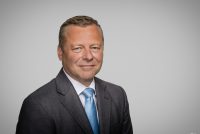
Chief Executive

Deputy Chief Executive
Our Team executes the strategy set by the Board. It manages projects and steers the work of the Expert Groups in cooperation with their Chairs and Vice-Chairs.
Consisting of people with diverse nationalities and professional backgrounds based in Brussels, the Team is led by the Chief Executive who manages and represents Accountancy Europe.

Director, Head of Advocacy & Policy

Director, Head of Reporting

Manager, Audit & Assurance

Advisor, Policy & Advocacy

Senior Manager, Professional Expertise

Advisor, Communications

Manager, Advocacy & Policy
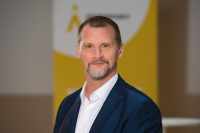
Senior Director, Professional Services

Manager, Audit & Assurance

Strategy & Operations

Senior Advisor, Communications & Events
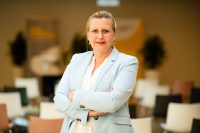
Manager, Office & Finance

Senior Administrative Officer

Senior Manager, Communications

Administrative Officer

Senior Manager, Head of Sustainability
Accountancy Europe’s annual statutory accounts are audited and prepared in accordance with the requirements of Belgian legislation.
You may consult the annual accounts of Accountancy Europe on the National Bank of Belgium’s website.
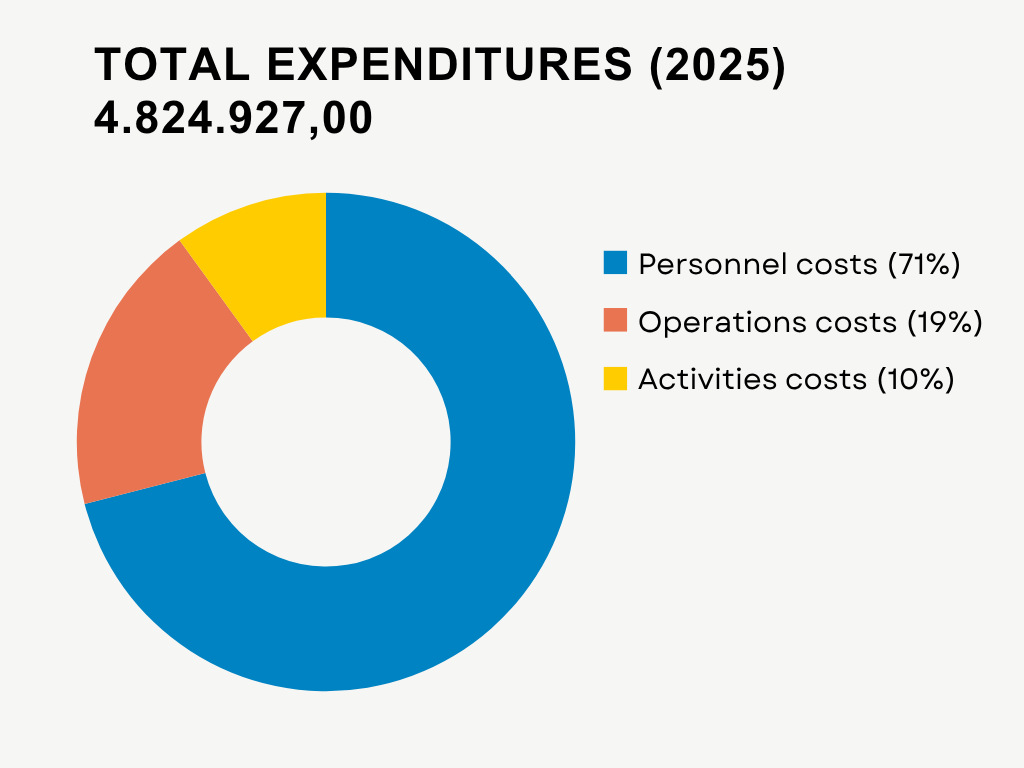
Members’ contributions account for 93%, ACE events revenue for 6%, and other income for 1% of Accountancy Europe’s 2025 income (these figures are estimates as of the date of publication; our financial statements are approved in June).