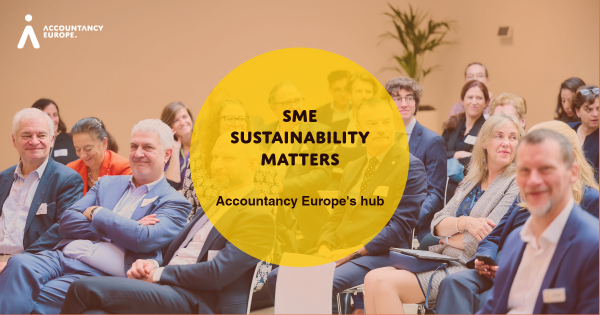
We launched a practical resource to support small and medium-sized enterprises on their sustainability journey. Read more

Our new paper examines how various actors within the corporate ecosystem can identify and mitigate greenwashing's risks
The European Supervisory Authorities (ESAs) have issued joint guidelines to provide a harmonised approach for how competent national authorities integrate environmental, social, and governance (ESG) risks into their supervisory stress testing. Competent authorities are expected to make every effort to comply by incorporating these practices into their supervisory processes. National competent authorities must notify their respective ESA of their compliance status or provide reasons for non-compliance by 31 May 2026. Failure to do so by this deadline will result in the authority being recorded as non-compliant on the ESAs’ public websites.
A newly updated data tool by the Centre for Research on Multinational Corporations (SOMO) reveals that around 1,400 corporate groups fall under the EU’s Corporate Sustainability Due Diligence Directive (CSDDD) after recent revisions significantly narrowed its scope.
Following the EU’s “Omnibus I” changes, only 974 EU-based corporate groups remain covered, down 71% from the original 2024 proposal.
The database identifies nearly 2,900 companies meeting thresholds, grouped into roughly 1,447 corporate structures, including many headquartered outside the EU.
Despite the reduction, the directive still applies to some of the largest global firms, particularly in manufacturing, retail, and services, with compliance required by July 2029.
EFRAG’s General Assembly has appointed Kerstin Lopatta as the new Sustainability Reporting Board (SRB) Chair, effective 1 May 2026, for a three-year term.
Formerly EFRAG SRB Vice Chair, Lopatta brings extensive experience as an auditor, consultant, and academic. Her appointment follows a nomination by the European Commission (EC), after consultation with the European Parliament (EP) and the Council.
The International Sustainability Standards Board (ISSB) agreed to propose nature-related disclosures in the form of a Practice Statement, which would complement the requirements in IFRS S1 General Requirements for Disclosure of Sustainability-related Financial Information and IFRS S2 Climate-related Disclosures, without changing the requirements in the standards. The Practice Statement would explain how a company could provide nature-related disclosures in accordance with IFRS S1.
The OECD has released two new publications: a mapping of 21 due diligence laws across 11 jurisdictions, and a policy brief on reporting requirements.
The findings highlight both convergence and divergence. While laws share common objectives and are grounded in international standards, differences remain in how companies identify, prioritise, and address risks, sometimes creating conflicting expectations, especially in supplier engagement.
On reporting, requirements align on core elements but vary in scope, methodologies, and data, which leads to inconsistencies in disclosed risks and impacts.
These insights will feed into the next Inclusive Platform meeting on 1 July 2026, focusing on stronger policy cooperation to promote coherent, proportionate practices and avoid overburdening businesses and their suppliers.
ACCA and Chartered Accountants Australia and New Zealand published a report to assist stakeholders in navigating the complexities of assurance over sustainability reporting, focusing on estimates and forward-looking information. The report illustrates: