In-person event
9 December 2025 (09:00 - 12:00)
Add to my calendarBd Charlemagne 80, 1000 Bruxelles
View on Google Maps
“We are here to talk about something that goes far beyond rules, numbers, and compliance checklists”, said Eelco van der Enden, Accountancy Europe CEO, as he welcomed participants. “AML matters, of course, but too often the human reality behind it gets lost. Money laundering is not an abstract concept”.
Eelco emphasised that every laundered euro is linked to real people and harm – whether it is women exploited through trafficking or communities undermined by organised crime.
Regulators, auditors, accountants, and finance professionals are guardians of the public interest. Our role goes beyond following rules on paper. We are co-constructors of a prosperous, inclusive, and resilient economy.
Eelco van der Enden
He finished by saying that understanding the human cost of money laundering helps us reconnect AML with its true objectives:
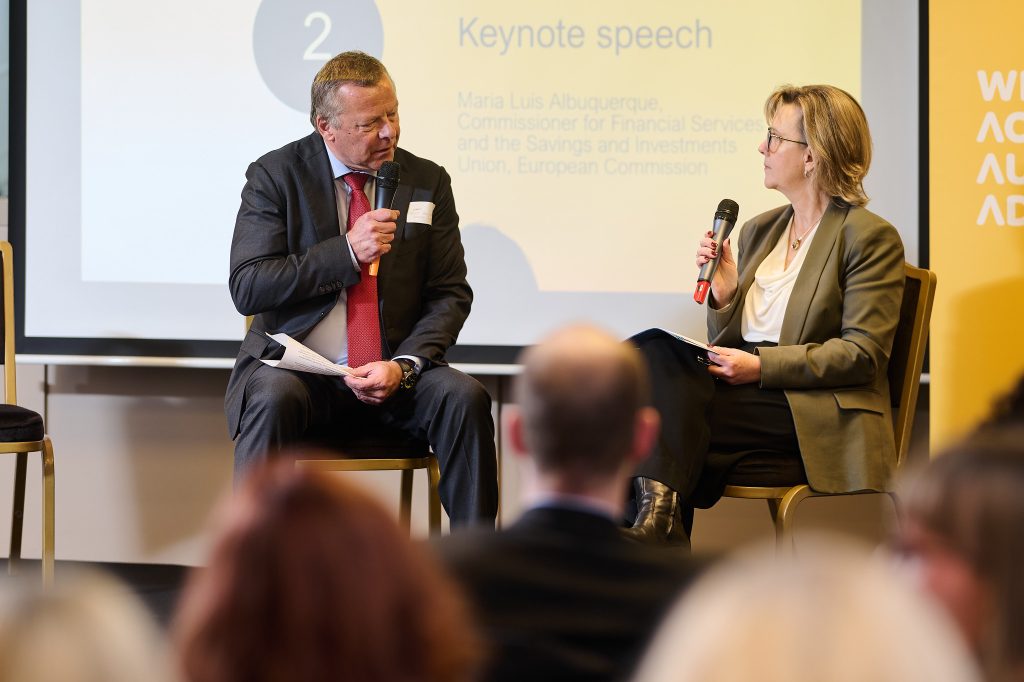
In a fireside chat with Eelco van der Enden, Commissioner Maria Luís Albuquerque reflected on the frameworks we have today, which show more than three decades of shared recognition that money laundering and terrorist financing are serious, persistent threats.
Fragmentation, however, remains a structural weakness – and the benefits of the Single Market, one of Europe’s greatest achievements, cannot be fully realised while fragmentation persists. Member States cannot individually tackle these challenges. Strong AML framework, coherent implementation, and effective supervision are tools to deliver security, stability, and fairness – and to ensure Europe protects its people, upholds its values, and meets citizens’ expectations.
Commissioner Albuquerque said that auditors are the eyes of supervisors inside organisations and play a critical role in ensuring companies deliver on the purpose of the rules, not just the form. Their credibility, insight, and judgment are essential to protect trust in financial markets.
We urge you to go beyond checklists: focus on substance, assess whether rules achieve their intended impact, and help ensure that compliance truly serves its purpose.
Maria Luís Albuquerque
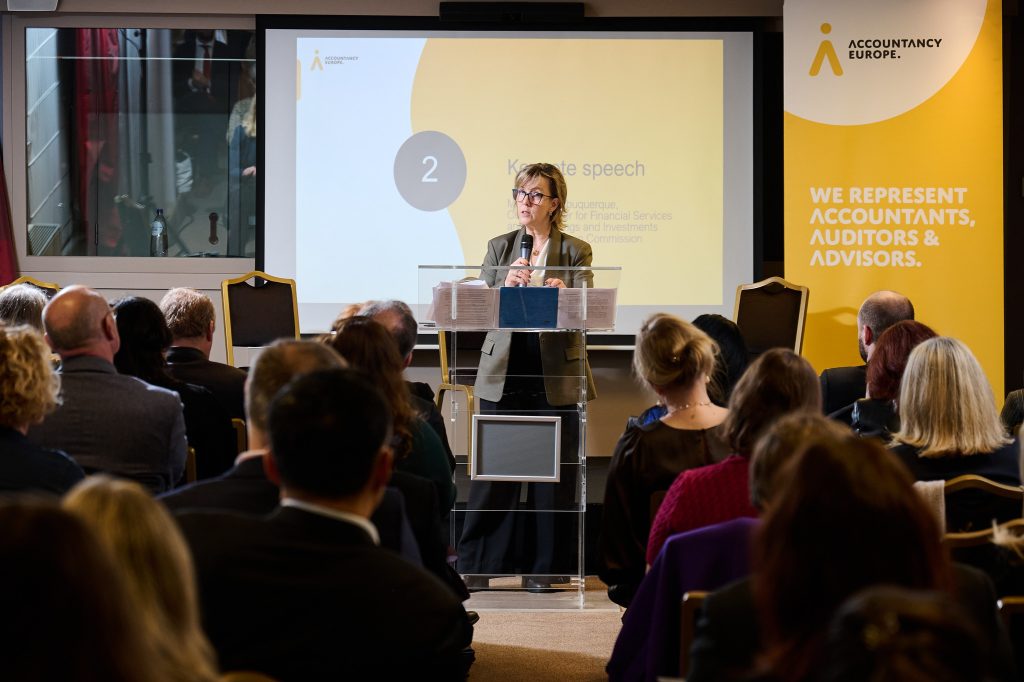
After the fireside chat, Albuquerque delivered a keynote speech highlighting that AML rules should not be viewed as a burden, but as a responsibility – a duty we all share towards society. For her, AML rules are broader than regulatory obligations.
“Fighting money laundering is not an isolated regulatory exercise”, she said. “It is a critical link in the chain that protects trust in our financial system, shields our societies from criminal abuse, and defends the safety, dignity and prosperity for all Europeans”.
See the Commissioner’s full speech here.
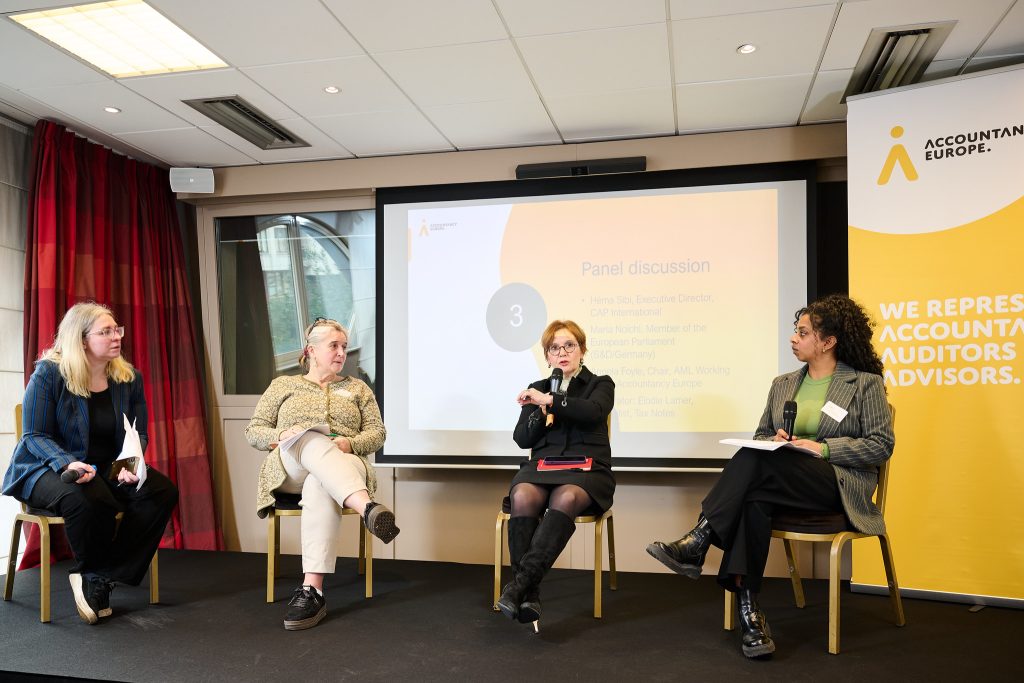
Join Accountancy Europe and key actors across the AML ecosystem to explore the real-life impacts and human cost of financial crime, and discuss how cooperation across sectors can make a tangible difference.
The EU has recently overhauled its Anti-Money Laundering / Countering the Financing of Terrorism (AML/CFT) framework, but compliance is only part of the story. What truly matters is understanding the real-world impact of non-compliance – the human suffering, the communities torn apart, and the crimes that robust AML rules are designed to prevent.
Fighting money laundering requires more than regulations. It takes an entire ecosystem of vigilance and cooperation – authorities, supervisors, civil society organisations and obliged entities.
We will discuss:
Who should attend:
08:30 - 09:20
09:20 - 09:30
Eelco van der Enden, CEO, Accountancy Europe
09:30 - 10:00
Maria Luís Albuquerque, Commissioner for Financial Services and the Savings and Investments Union, European Commission
10:00 - 11:00
- Héma Sibi, Executive Director, CAP International
- Maria Noichl, Member of the European Parliament (S&D/Germany)
- Angela Foyle, Chair, AML Working Party, Accountancy Europe
- Moderator: Elodie Lamer, Journalist, Tax Notes
11:00 - 12:00